
 +38 (068) 400 - 00- 15



Drip irrigation: how the system works and what is needed for installation
Drip irrigation is a system that supplies water in small portions directly to the roots of plants. This method of irrigation is suitable for gardens, greenhouses, seedlings, berry fields, vineyards, flowerbeds, and decorative plants.
The main advantage of drip irrigation is water savings and uniform soil moisture. Water is not sprayed on the leaves, does not flow unnecessarily, and does not create excess moisture on the surface.
How drip irrigation works
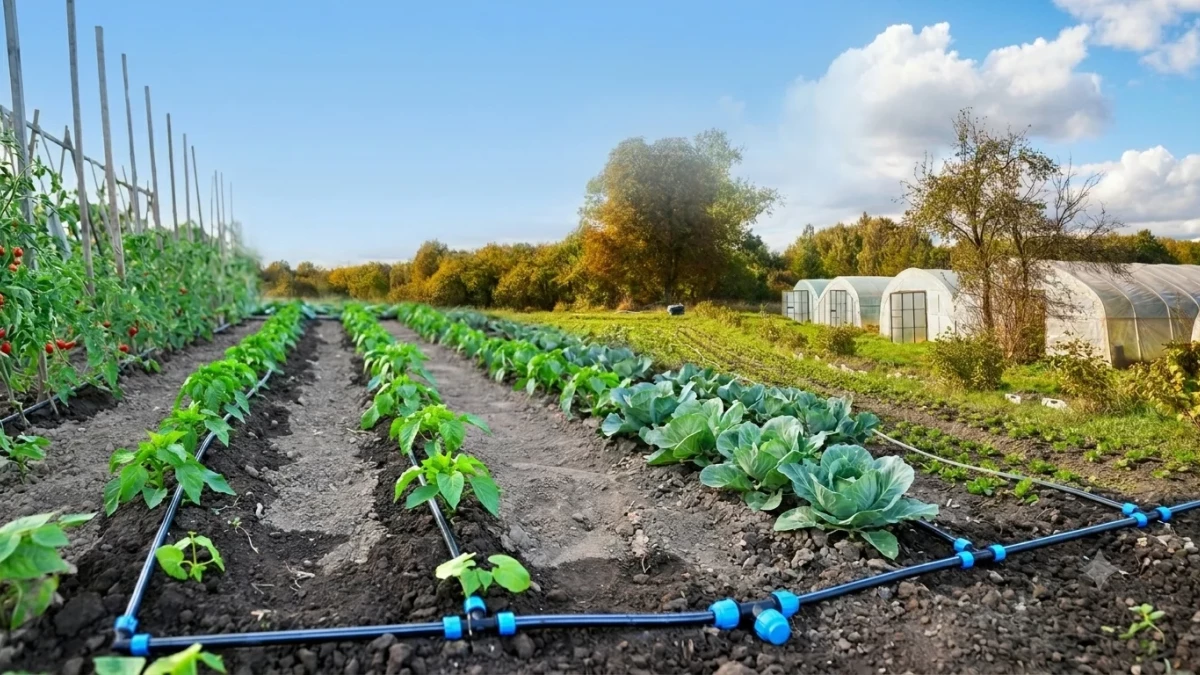
Water is supplied from a source through a main pipe, passes through a filter, and then enters the drip tape, tube or individual drippers. Through special holes or emitters, water comes out slowly and evenly.
The system can operate manually through a valve or automatically - using a timer or controller. For stable operation, it is important to correctly select pressure, filtration, and line length.
What is needed for drip irrigation installation
Main pipe supplies water to the main irrigation areas.
Drip tape or tube distributes water along the plants.
Filter protects the system from contamination.
Pressure reducer reduces pressure to a safe level.
Starters, valves, tees, elbows and connectors are needed for system installation and branching.
Plugs close the ends of the lines.
Timer or controller allows you to automate irrigation.
Drip tape or drip tube
Drip tape is often used for seasonal irrigation of vegetables, strawberries, greenhouses, and beds. It is lightweight, convenient to lay, and well-suited for row crops.
Drip tube is more durable and long-lasting. It is often used for gardens, berry fields, vineyards, decorative plantings, and perennial plants.
Why is a filter
Filter is one of the most important elements of drip irrigation. Without it, emitters can quickly clog with sand, algae, water plants, or small particles from the water.
For drip systems, mesh or disk filters are usually used. The choice depends on the water source, its purity, and system performance.
Why is proper pressure important
Drip tape and tube are designed for a specific working pressure. If the pressure is too high, the tape may be damaged or the connections may start to leak. If the pressure is too low, water will not reach the end of the line.
For stable irrigation, a pressure reducer is often installed. It helps protect the system and ensures uniform water supply.
Advantages of drip irrigation
water savings;
uniform soil moisture;
less weeds between rows;
possibility of irrigation in a greenhouse;
convenient application of fertilizers through the system;
Less manual labor on the site.
Conclusion
Drip irrigation is a practical solution for those who want to get a stable harvest and reduce water consumption. For the system to work for a long time, it is important to correctly select filter, pressure, pipe, tape, fittings, and other components.
In Agras, you can find everything you need to install drip irrigation: drip tape, tube, starters, valves, tees, elbows, plugs, filters, and timers for convenient irrigation.


Comments
There are no comments yet.
Leave a comment